







.svg)

.svg)
.svg)



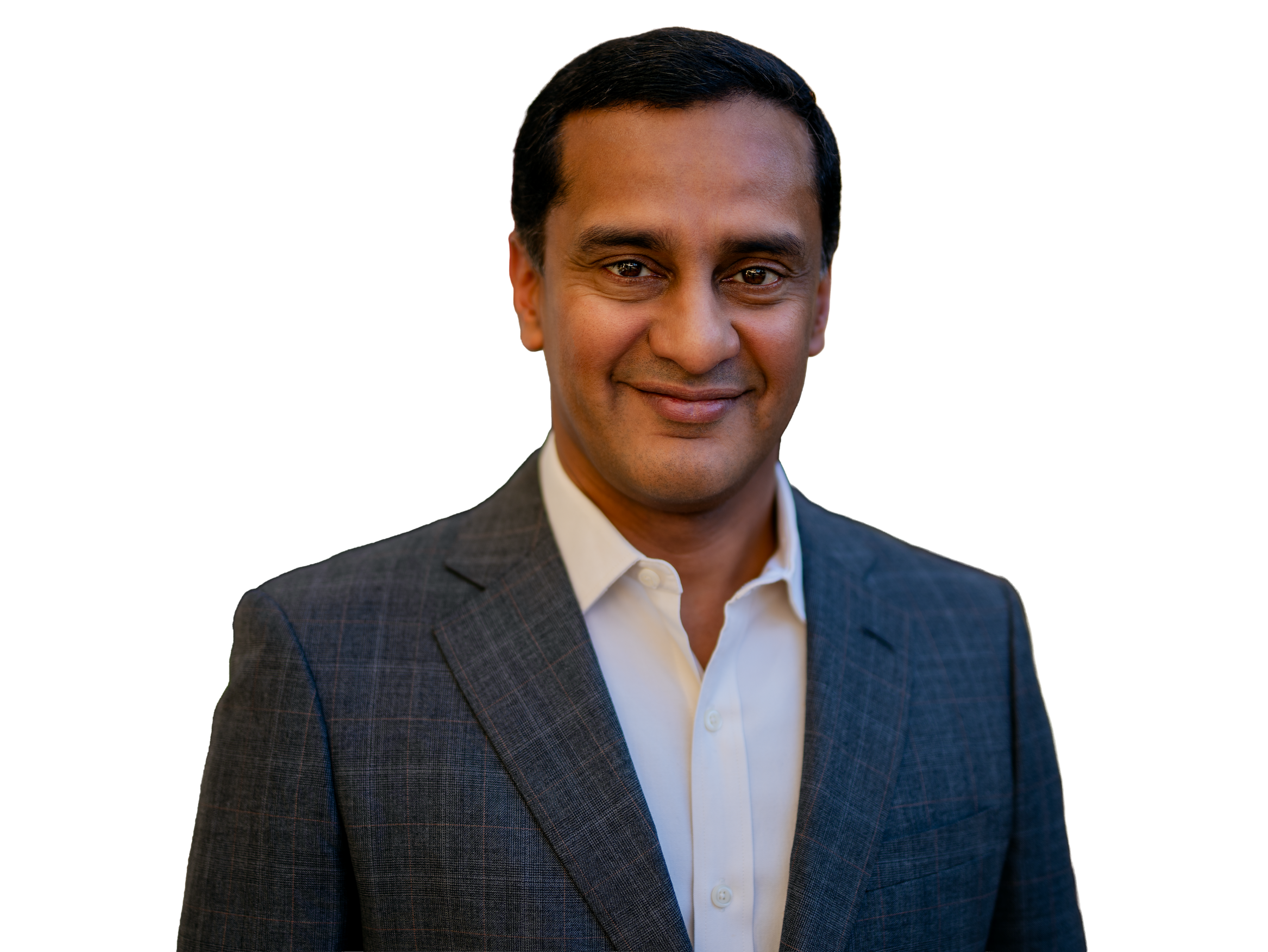
By Jay Vijayan (CEO) and Binu Mathew (CTO), Tekion
If you read one thing: Automotive retail just crossed from software with AI features to AI that runs the operations in tandem with people — and the two are not the same thing. In an AI-native automotive retail dealership, agents act on the store's own data inside a secure boundary, staff get work done by saying what they want instead of clicking through or typing on screens, and customers increasingly transact with an AI agent instead of a form. This can't be bolted on; it has to be built from the data up. That's the line the industry just crossed — and the one Tekion built to operate on.
Every kind of business software hits a moment when the ground shifts under it — when the question stops being what features does it have and becomes how the work actually gets done. Automotive retail is in that moment right now.
Dealerships have run on much the same kind of software for decades (leaving lots of gaps as the industry evolved), with newer tools — and, more recently, AI — bolted on at the edges. That will not survive the needs of today and the future. In its place is something we've spent the last few years building and running inside our own company before we ever powered it for a dealership: a way of running a store where AI agents do real work on the dealership's own data and context, with the people in the store still in charge. The daily job gets done by saying what you want instead of clicking through screen after screen. And at the edge of the business, the customer increasingly gets things done by talking to an AI agent instead of filling out a form.
This isn't a prediction. It's a description of systems that are already running — and an argument about why the discipline behind them, not any single feature, is what will decide who leads.
What "AI-native" actually means
The phrase gets used loosely, so let us be precise — because the distinction is the whole argument.
For decades, automotive retail software got better the way most business software did, by adding features: a cleaner screen, a faster report, a tool bolted on at the side. More recently, AI arrived the same way: one more capability layered on top of software that was, underneath, still a stack of screens for people to operate step by step. Call that software with AI features. It may be useful in some ways, but not what businesses really need today and for the fast evolving future.
AI-native is different in kind, not degree. The software that runs the store is built, from the ground up, for agents to do the work directly on the dealership's own live records, inside a secure boundary, with people setting direction and staying in control. The records stop being a database a person clicks through and become a surface an agent can act on. It sounds subtle. But, it is both structural and architectural, it is the reason this can't be added later.
An AI agent is only as good as the data it's allowed to act on. If the customer history, the live inventory, the pricing, the financing terms, and the real service capacity all live in systems you don't own — reached through brittle integrations, refreshed overnight, controlled by many, then the most capable model in the world is still reasoning over a blurry, second-hand copy of the business with gaps. AI-native starts from the other end: platform that already holds the dealership's real-time records as the source of truth, with agents built to act on them natively and safely. You don't get there by adding AI to old software. You get there by having built the system that way in the first place.
That line has been crossed. The rest of this piece is about what's on the other side of it — three changes you can already see, and the discipline that turns them from demos into a business.
Three changes you can already see
1. The system of record is open to agents — safely, inside the walls. A dealership's core records used to be reachable only through screens someone had to work through. In T1, the AI-native platform interface and an AI agent orchestrator for you we are unveiling at Tekion One, agents work directly with those same records, under explicit rules about exactly what each agent may see and do. The work happens inside the dealership's own environment, on its real-time data — there is no copying customer records or a pricing sheet into a public AI tool to get an answer (that may or may not be accurate based on the data you upload and how you ask). The information stays put; the agents reach it through a single governed door. High-confidence steps run on their own; any real action requires the right person's approval with an audit trail. The people in the store stay in charge, the software simply takes on more of the work.
This is also why the change runs deeper than convenience. Those same records: what's in stock, what it costs, what a customer owes, what a trade is worth, are the source of truth the entire industry runs on. As buyers begin arriving with AI agents of their own: to shop, to compare, to negotiate, the dealership running on a platform built for agents is positioned to serve those agents directly, rather than be intermediated out of its own customer relationships.
2. The daily work moves from clicking to asking. A dealership runs on hundreds of screens, and learning them has always been part of the job. The AI-native model turns that around: a person says what they want, and the system works out the steps and carries them out, a single request standing in for a dozen clicks across half a dozen screens, or for a whole multi-step job done on the person's behalf. We organize this around an idea we call IDEAL — Inform, Decide, Execute, Ask, Learn — and it runs across every role in the store, from sales and service to the technician, the back office, and the general manager. The point isn't speed alone. It's that the system applies the same logic every time, takes the tedious parts off people's plates, and frees them for the customer in front of them.
3. Customers meet an assistant, not a hold queue. Nowhere is this more real today than the service lane. A dealership's service department lives on the phone, and for years a call that came in after hours or while every receptionist or advisor was already busy: went to voicemail, or to a competitor. Scheduler AI is an example that changes it. It's a voice agent that answers inbound service calls around the clock, in natural conversation, and books, reschedules, or cancels the appointment from end to end, working from the dealership's own service capacity, its op codes, and advisor availability, the same information a great service advisor would use. A missed call at 8:30 p.m. becomes a booked appointment in minutes. No form, no hold music, no callback tomorrow.
These are not three separate products. They rest on one thing: the dealership's own records, finally open to agents in a governed, trustworthy way. Once information can be acted on, not just displayed then the question a store could only answer by morning gets answered at midnight.
The discipline underneath — makes it one of a kind
It would be easy to read those three as a list of features. That misses the point and it's the most important thing to understand about where this goes, whether you run a dealership or invest in one.
A feature or a few features can be copied. Anyone with a capable team can demo an agent reading inventory or taking an instruction. What is genuinely hard to copy is the way of everything working in unison that produces those capabilities securely and reliably — and that lets you trust them in a business where a wrong answer costs real money and business impact.
That way of working is the real asset, and it shows up first in how we build. Before we pointed any of this at a dealership, we ran it on ourselves: the way Tekion specifies, builds, and checks its own software is itself agent-assisted and disciplined, on internal systems no customer touches. We proved the method on our own work first, and only what earns that trust gets pointed at a store.
The mechanism that makes the discipline real is something we call the Golden Thread: every decision the software makes traces backward to the reason behind it and forward to the check that keeps it honest. Nothing is claimed that can't be traced; nothing ships that can't be checked. When an agent acts on a dealership's behalf, the Golden Thread is what lets us and, in time, a dealer, an auditor, or a manufacturer answer the question every serious use of AI eventually faces: why did it do that, and what makes sure it does the right thing next time?
That is the difference between adding AI and being AI-native. Adding AI is a feature decision. Being AI-native is a decision about how you work, produce, making every step, from the reason to the result, something you can stand behind, so you can add capability quickly without ever losing track of whether it's safe and right. It is also what lets the same approach run across thousands of dealerships, on each one's own secured data, rather than working only in a demo.
Why this compounds
A way of working does something a feature never can: it compounds.
A single feature is a snapshot, the moment it ships, someone can start copying it. A way of working produces the next capability, and the one after that. Ordinarily, complexity piles up against you: every new feature makes the next one harder. Done with real discipline, AI-native work inverts that. The reasons, the rules, and the checks built to ship one capability are the very things that make the next one faster and safer. The work becomes repeatable; the body of work does not.
We see it most clearly in our own engineering, on the systems no customer touches: that discipline now turns out new, fully-checked capability at a rate we couldn't have approached a year ago, each new capability inheriting the checks built for the last.
That's why this is a position, not a feature race. Match one of the three changes and you've matched a snapshot. Match the pace, and you've had to build the discipline, and the discipline is the part that took us years, and that we built by running it on ourselves first.
What to look for
AI claims are about to accelerate across this industry, from everyone, faster and faster. When they do, the right question isn't "how long is the feature list." Ask instead:
- Is it a platform that can act on live data and business context, or only summarize it?
- Are its actions accurate, governed, and auditable, or opaque?
- Does capability improve in production, or only in the demo?
That's the test we hold ourselves to, and the one we'd ask you to put to us and to anyone else making AI claims in automotive retail. We're comfortable setting that bar because it's the one we built to clear.
What comes next
The dealership ran on paperwork, then on screens. What comes next runs on agents: software that does the work, execute with people in charge and a clear record behind every step.
By that standard, the shift in automotive retail isn't a forecast, it's underway. The software that runs the store works for agents, the daily job gets done by asking, and the customer is starting to deal with an assistant. We didn't add AI to a dealer management system; we built the AI-native one, and that isn't a feature a competitor ships next quarter or even next year. It's a way of working they would have to become.
This article is the first in a series. Over the coming weeks we'll go under the hood on each part of it: the standards we hold our AI to, the way we build and check our own software, how the IDEAL model works in practice, and the platform that runs it all. This piece names the change; those will show the work behind it.
The companies that treat this as a discipline, not a feature, will define what automotive retail becomes. You don't have to take our word for it, come to Tekion One and watch it run.
This is the first post in the Tekion engineering series. In the coming weeks: the principles we hold our AI to · how we treat our own software specs as production code · the IDEAL model in practice · and the platform that runs it all.

.png)





.svg)