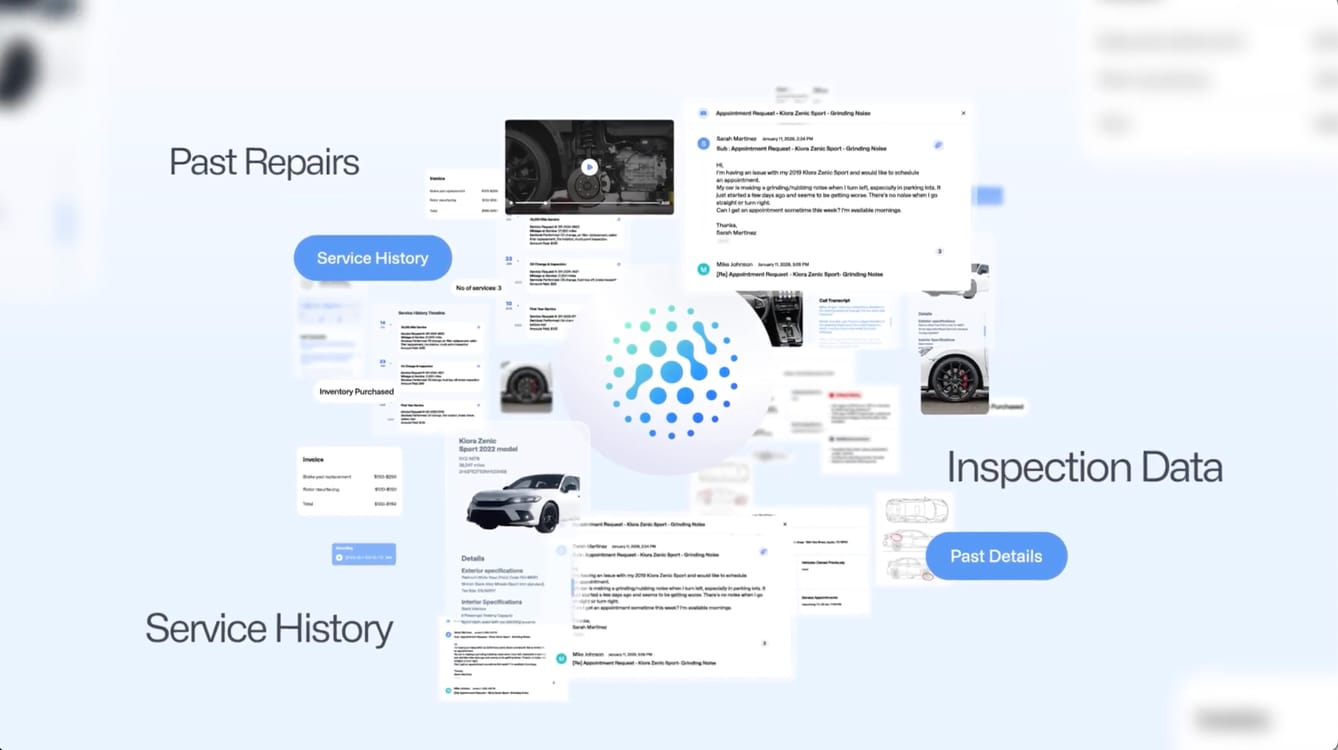
For decades, traditional dealer management systems dominated automotive retail. But as technology evolved and consumer shopping preferences changed, legacy systems fell behind—leaving dealers with outdated technology, fragmented workflows, and mounting vendor fees.
Over the past decade, modern solutions like Tekion’s cloud- and AI-native Automotive Retail Cloud (ARC) have emerged, giving dealers the tools they need to stay competitive and keep pace in today’s market. Tekion delivers measurable business results for dealers—faster operations, greater efficiency, and lower total cost of ownership than managing fragmented legacy systems.
If you’re still operating a traditional, legacy dealer management system, here’s what you need to know about why the shift is happening and what you might be missing.
The Legacy DMS Problem
Today, legacy DMS platforms suffer from critical limitations:
Fragmented Systems: Most dealerships operating on traditional platforms juggle between 4-12 different third-party applications just to run their business.
Slow Digital Experience: Legacy platforms were built for on-premise servers and desktop workflows.
Hidden and Escalating Costs: Legacy systems often require add-on vendors for CRM, online sales, e-signature, payments, finance tools, and integrations
Rigid, Proprietary Integrations: Integrations are expensive, slow to develop, and create vendor lock-in, and data ownership often remains with the DMS provider, not the dealer.
Slow Innovation Cycles: Legacy platforms weren't designed to be AI-native, so AI capabilities have to be bolted on, and updates come in major releases every 12-24 months rather than continuously, meaning dealers have often already moved on by the time a feature arrives.
The Modern Cloud-Native Alternative: Measurable Results
When dealerships transition to a modern, cloud-native, AI-native platform, the changes are immediate and measurable. Unlike legacy systems that bolt AI onto an outdated foundation, Tekion is built from the ground up with unified AI capabilities embedded throughout every department—from finance to service to sales. Here's what the data shows when dealerships make this transition:
Finance Department Results: The Benchmarking Data
This data comes from 1,300+ dealership groups that migrated to Tekion, comparing their likely most mature state on legacy systems (12 months before transition) to their performance 12 months after go-live.
Overall Dealer Performance (1,300+ dealers):
- Back PVR: +$79 (5%) — from $1,577 to $1,656
- Products Per Deal: +0.41 (49.6%) — from 0.82 to 1.23
Dealers Migrating from Competitor 1 (530+ dealers):
- Back PVR: +$81 (5.2%) — from $1,578 to $1,659
- Products Per Deal: +0.48 (60.4%) — from 0.80 to 1.28
Dealers Migrating from Competitor 2 (180+ dealers):
- Back PVR: +$106 (6.7%) — from $1,575 to $1,681
- Products Per Deal: +0.41 (46.6%) — from 0.88 to 1.29
What This Means: For a 300-car dealership in the overall group, the +$79 Back PVR improvement alone equals $23,700 in additional monthly gross profit, or $284,400 annually.
These gains aren't just about the technology. They come from three things together: people motivated to do the right thing, better tools that help them do their best work, and smarter processes that automate the low-value tasks and give time back to our people. Technology is the enabler—the people and the process are what make it stick.
When F&I managers operate on one integrated platform instead of juggling multiple disconnected systems, they spend significantly less time on administrative overhead—freeing them to focus on presenting products and negotiating with customers.