







.svg)

.svg)
.svg)



When a BDC advisor sits down to draft a follow-up email to a customer, it’s tempting to start with ChatGPT. With just a few clicks, a quick prompt, and copy-paste, the email is done in seconds. What that advisor doesn’t realize: they’ve just sent your customer’s name, contact information, and dealership record to an external server owned by OpenAI. And they’ve sent it outside any company’s security policy, any encryption standard, any compliance framework, and any audit trail.
During Cybersecurity Awareness Month, the conversation around dealership threats usually centers on ransomware and phishing. Those are real, critical concerns—but there’s a quieter risk happening right now: well-meaning employees using personal AI accounts to do their jobs faster.
Here’s what dealership leaders need to understand about this gap, why it matters, and what separates enterprise security from the consumer tools your team might already be using.
The Hidden Cost of “Free” AI
When an employee uses a personal ChatGPT account—or any consumer-grade AI tool—they’re not actually using it for free. The cost is your customer data.
Here’s how it works
Every prompt goes to OpenAI’s servers. Unless the account is specifically a ChatGPT Enterprise account with a Data Processing Addendum (DPA), that data may be retained, analyzed, and potentially used to train future AI models (Is ChatGPT a Security Risk to Your Company?). Even if the person never intentionally shares a customer’s name or number, the metadata—how information is phrased, the context, the specifics of your business process—becomes part of that external system.
This isn’t a theoretical risk. Last year, Samsung engineers leaked confidential source code and meeting notes by pasting them into ChatGPT. The company had to issue an internal ban on the tool (ChatGPT Security Risks: All You Need to Know). For a dealership, the equivalent is an advisor pasting a customer’s financing agreement into a prompt to draft a follow-up message, or a manager copying wholesale purchase data to ask ChatGPT for market analysis.
The Compliance Trap
Most dealerships store customer data under compliance frameworks, but when an employee uses a personal ChatGPT account, that data leaves those frameworks entirely.
There’s no Data Processing Addendum, no audit log showing who accessed what, and no right to deletion if a customer requests it. And because the activity happens outside your operating system, your security team often doesn’t even know it’s happening. This is called “shadow AI”—tools your team is already using, your compliance team knows nothing about (Is ChatGPT Secure? What Users and Businesses Should Know in 2026).
Why This Matters More Than Ever
Cybersecurity in automotive retail isn’t new—dealerships are high-value targets—but AI has changed the threat landscape. According to industry reports, cyberattacks on dealerships have increased nearly 1,000% since mid-2024, with attackers using AI to generate more convincing phishing emails, automate social engineering, and identify vulnerabilities faster (AI doubled auto industry cyberattacks).
Dealerships are investing heavily in response: cloud security solutions, ransomware defenses, and AI-powered threat detection top the list (Defending against cyberattacks: Top current risks for auto dealerships). But those investments only protect the perimeter. They don’t protect the gap between what your team thinks is secure and what actually is.
A data leak isn’t always a breach. It’s also an employee who synced their customer relationship data with an unapproved cloud app, or forwarded a deal recap to their personal email, or asked ChatGPT to help draft warranty audit language—not knowing they’ve just exposed your dealership to regulatory fines, customer trust erosion, and legal liability.
What Secure AI Actually Looks Like
The difference between a consumer AI tool and an enterprise AI platform is foundational. Here’s what actually matters:
Data stays inside your infrastructure. Every prompt, every response, every piece of context stays on servers you control, with encryption standards you can audit. Your customer information never touches external systems.
You have an audit trail. Every interaction is logged, timestamped, and tied to a user. If something goes wrong, you can trace it. If a regulator asks, you can show exactly what happened.
Compliance is built in. A real enterprise AI platform comes with a Data Processing Addendum, SOC 2 compliance, and the contractual commitments your security team actually needs.
Role-based access controls work. Not every advisor needs access to every tool. Not every tool needs access to every database. Permissions are granular and enforceable.
The training data is yours. An enterprise AI platform that serves your dealership uses your data to improve, not OpenAI’s model or anyone else’s. The AI learns your workflow, your language, your business—and that learning stays proprietary to you.
The T1 Pro Solution
Tekion built T1 Pro directly into Automotive Retail Cloud (ARC)—meaning it works inside your DMS, not outside it like ChatGPT.
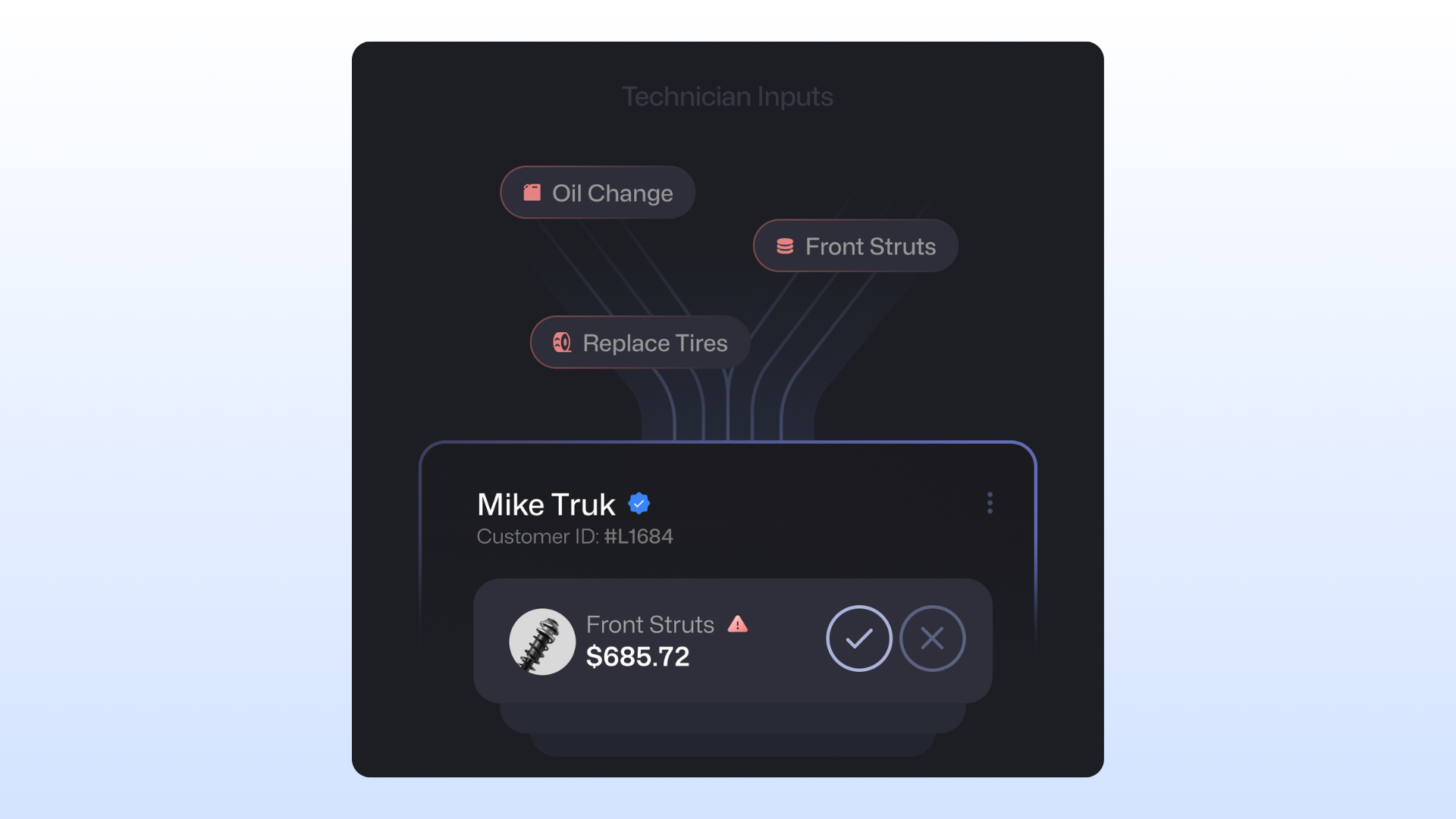
Your team asks a question. T1 Pro analyzes your live dealership data and recommends next steps. You approve. It executes—no external servers, no data leakage, no personal accounts. Every action is logged and auditable.
Unlike ChatGPT, T1 Pro doesn't just suggest ideas. It executes approved workflows inside ARC under the security and compliance rules you define. ARC is ISO 42001 certified, SOC 2 certified, built with data protection and privacy controls—security isn't bolted on; it's foundational.
If your team is using personal AI accounts to work faster, they're trading speed for security. T1 Pro gives you both.
Visit Tekion’s Trust Portal to learn more.

.png)





.svg)