







.svg)

.svg)
.svg)


.png)

An AI voice agent for a dealership service department answers inbound calls, books and reschedules appointments, and hands qualified requests to advisors — all without a human picking up the phone. For service managers evaluating solutions in 2026, the real question isn't whether these tools can talk. It's whether they can see your actual shop capacity while they're talking. That distinction separates a genuinely useful AI phone agent for dealerships from one that sounds smart, but books appointments your shop can't keep.
What Is an AI Voice Agent for a Dealership Service Department?
It's an autonomous AI agent that handles service-related phone calls the way a trained BDC agent would, but around the clock.
A modern AI voice agent for dealership service departments answers calls, understands natural speech, and takes action — not just messages. That action typically includes:
- Booking a new service appointment against real advisor and bay availability
- Rescheduling or canceling an existing appointment
- Answering basic status and hours questions
- Routing complex requests (warranty disputes, comebacks, escalations) to a live person
- Logging the interaction back into the DMS or scheduling system
The category is often called an AI receptionist for auto dealership phone lines, but the better implementations go further than reception. They function as automotive service scheduling AI — matching caller intent to op codes, technician skill sets, and transportation preferences in real time.
The best implementations guarantee one critical thing: the appointment the AI just booked reflects what your shop can actually deliver that day. Anyone can build a bot that sounds conversational. Fewer can guarantee data accuracy at the moment of booking. That's the evaluation criterion that matters most, and it's what separates solutions that create efficiency from solutions that create headaches.
Why Data Access Is the Real Differentiator
Most buyers start by evaluating voice quality — does it sound natural, does it handle interruptions, does it de-escalate an angry caller. Those things matter. But in our experience working with service departments on scheduling workflows, that's not where most AI scheduling failures happen.
Failures happen when the AI books against stale data. A caller asks for a same-day oil change, the AI confirms a 2 PM slot, and the write-up desk finds out that bay was already committed an hour earlier. The AI didn't fail at conversation. It failed at data access.
Service shops miss 20%–40% of inbound calls, which varies due to factors such as season and staffing — which means your shop is already losing customers you could capture. When you add AI to handle those calls, the last thing you want is for that AI to compound the problem by booking into stale schedules.
This is the single most important thing to evaluate when selecting an AI voice agent:
- Where does the AI's scheduling data live? On your DMS, or on a third-party layer synced to it?
- How often does that data refresh? In real time, or on a batch cycle (hourly, nightly)?
- What does the AI actually check before booking? Advisor availability only, or advisor plus bay, and loaner/transportation preferences?
- What happens after the call ends? Does the appointment land cleanly in your existing workflow, or does someone have to re-enter it?
- Is the AI built directly into your DMS, or connected through a separate integration layer?
The architectural difference matters because it affects how current the AI's information is at the moment of booking. A system built directly into your DMS reads live data with no sync delay. A system connected through an integration layer is always working from a copy of your data, refreshed on some interval. How wide that gap is determines whether you get accuracy or friction.
How Scheduler AI Works
Scheduler AI is Tekion's solution for handling your 24/7 service scheduling, and it was built to solve the data-access problem directly.
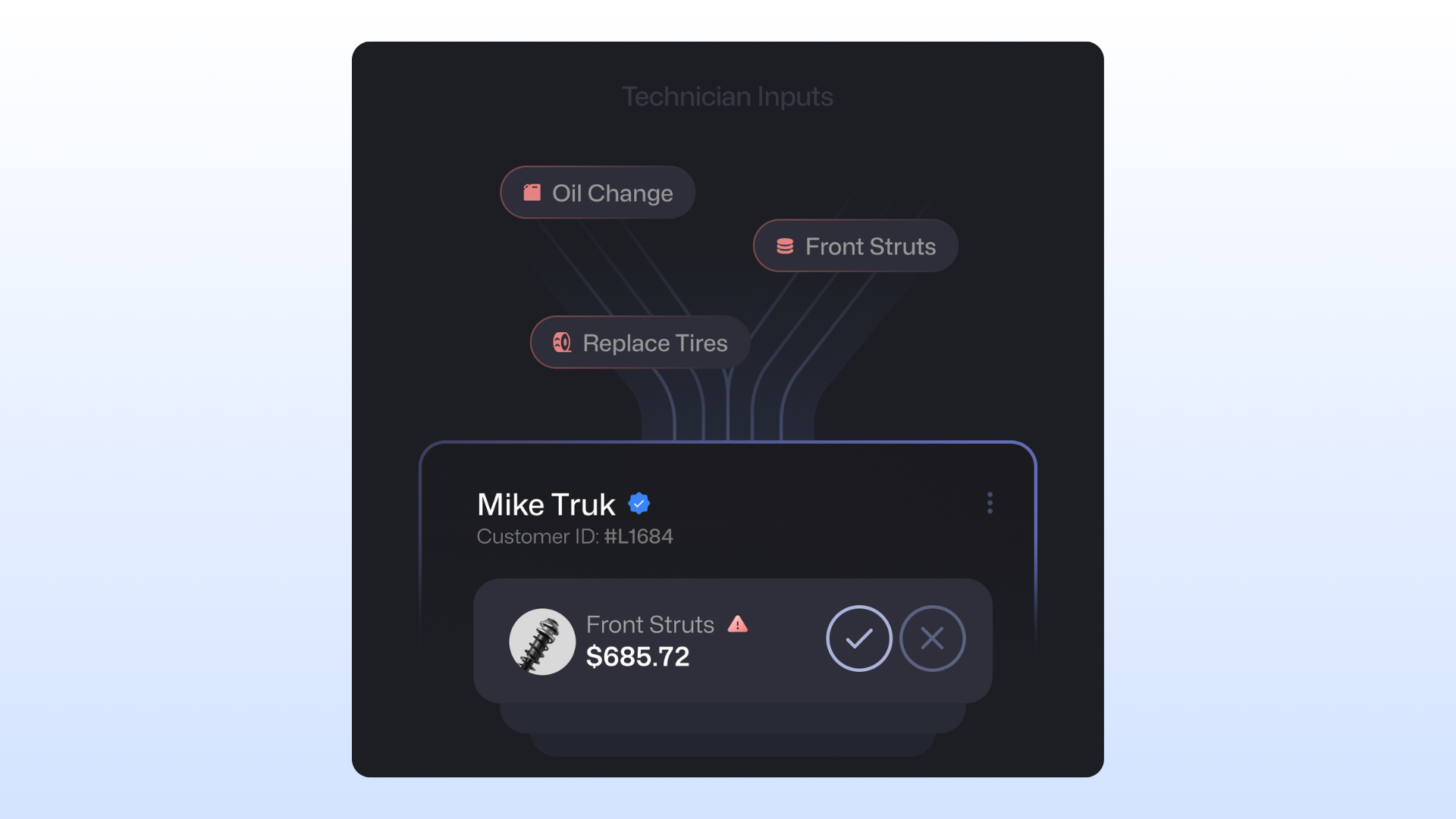
It runs natively on Tekion's AI-native Automotive Retail Cloud (ARC) — reading live service capacity, advisor availability, and op-code data directly from the same platform running your service department. Because Scheduler AI is built directly into ARC rather than bolted on, a booking decision and your shop floor's actual state are the same data, checked at the same moment.
A few specifics worth understanding:
- Unified real-time data, not synced data. Scheduler AI reads live capacity, advisor schedules, and op-code definitions directly from ARC. There's no separate database to keep in sync and no batch job that can fall behind.
- Op-code-aware booking. Requests are matched against the correct service operation, not just a generic "appointment slot," so time estimates and technician assignment are accurate from the first call.
- Transportation and loaner checks included. Booking logic accounts for loaner or shuttle eligibility at the point of scheduling, not after the fact.
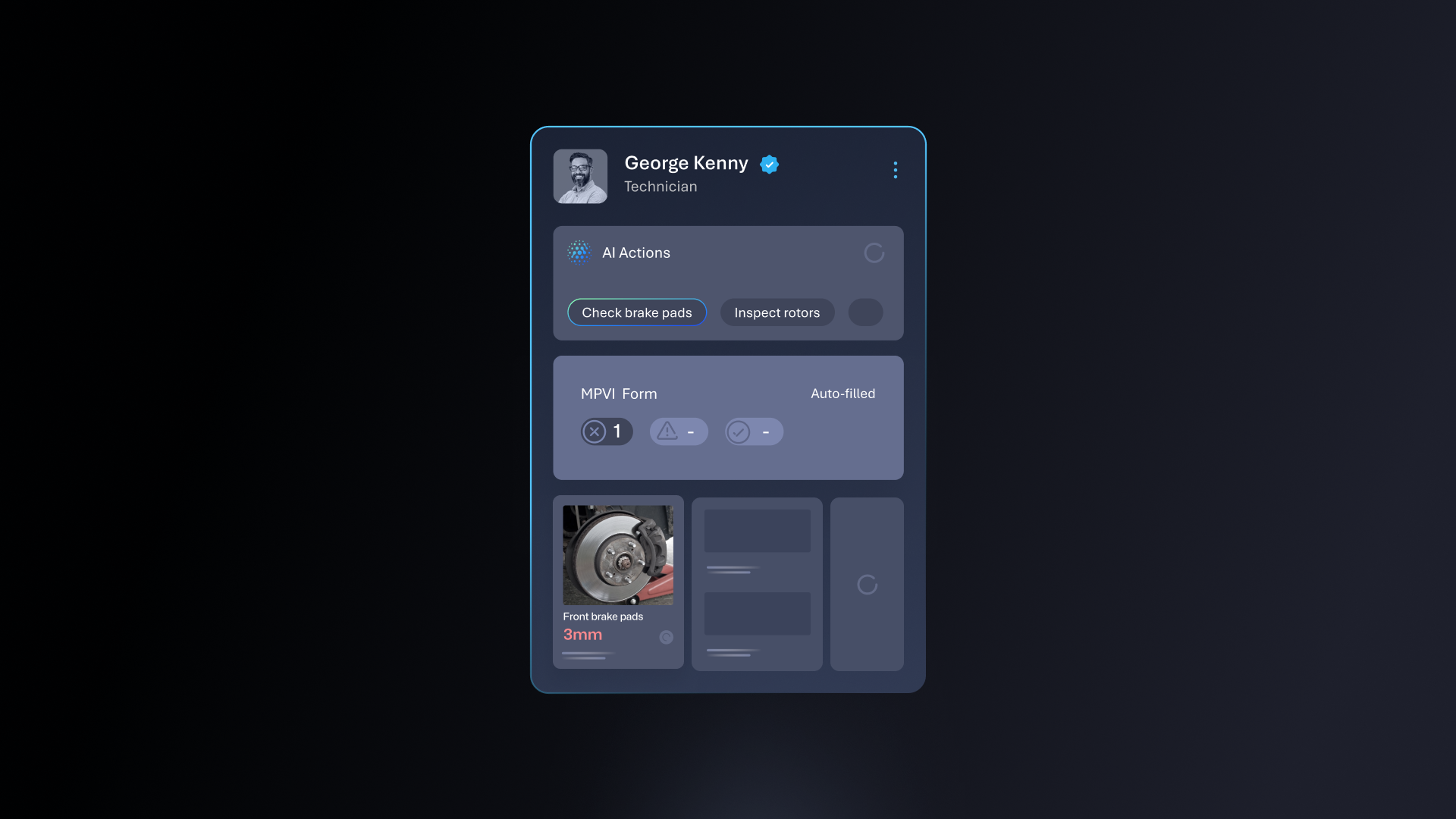
- Full workflow handoff, not just call routing. A completed call produces a call summary, a BDC queue entry, and a finished appointment record that's ready for the advisor at write-up — not a message someone still has to act on.
- 24/7 coverage with configurable voice options and disclosure controls, so the experience matches your brand and meets AI-disclosure requirements in your market.
And because Scheduler AI is part of Tekion's broader suite of AI Agents for Service, the same native-data principle extends to the rest of the service workflow inside Tekion's — not just the phone call that starts it.
What to Evaluate Before You Implement
When you're ready to add an AI voice agent to your service department, ask your provider these critical questions. These will tell you whether the system can actually handle your real shop conditions:
- Does the AI read live scheduling data, or does it work from a synced copy — and how often does that copy refresh?
- What happens to a booked appointment if capacity changes between the call and the write-up?
- Does the AI check bay and transportation preferences, or just advisor time?
- What does the handoff to my BDC or advisor actually look like after the call ends?
- Is pricing based on call volume, per-minute rates, or a flat platform fee — and what's included at each tier?
- Can I hear real call recordings, including calls with interruptions or accents, before I commit?
A provider that answers these clearly, with specifics rather than generalities, is one worth a serious evaluation. If they won't let you hear unscripted call recordings or won't put a technical resource on the call to answer the data-access questions above, treat that as information too.
See Scheduler AI in Action
Request a Demo
Frequently Asked Questions
What is an AI voice agent for a dealership service department?
It's software that answers service-related phone calls, understands what a customer needs, and takes action — booking, rescheduling, or canceling appointments — without requiring a live advisor to pick up the call.
Is an AI voice agent the same as an AI receptionist for an auto dealership?
Largely, yes. "AI receptionist" and "AI voice agent" describe the same category of tool. The differences that matter are in what the AI can actually do once it answers — simple message-taking versus full appointment booking against live shop data.
Can AI voice agents really book 24/7 without human involvement?
Yes, for most routine bookings, reschedules, and cancellations. Complex situations — disputes, comebacks, or unclear requests — are typically routed to a live team member, which is how these systems are designed to work.
Does an AI voice agent need to be built on my DMS to work well?
Not strictly, but it changes how current the AI's information is. Systems built directly into your DMS, like Scheduler AI on Tekion ARC, read live data with no sync delay. Systems connected through a separate integration layer are working from a copy that refreshes on an interval, which introduces a gap between what the AI knows and what your shop knows.
What's the difference between a natively-built AI voice agent and an integrated one?
A natively-built system like Scheduler AI runs directly inside your DMS (Tekion ARC), reading live data with no sync delay or separate integration layer. An integrated system connects to your DMS from the outside through a middleware layer that syncs data on an interval — which means the AI is always working from a copy of your data, not the live version. For scheduling, that gap matters: if capacity changes between when the AI books and when your team sees it, the natively-built approach catches that; the integrated approach may not.
How do I know if native architecture is worth switching for?
That depends on your current setup and priorities. If you're losing customers due to missed calls or double-booked appointments, the accuracy gain from native data access will be immediate and measurable. If your current system is running smoothly and your team absorbs the occasional scheduling conflict easily, the upgrade may not be urgent. The best way to know is to see it in action against your own data — ask for a live demo using your actual schedule, call volume, and op codes.
.png)





.svg)